An official website of the United States government
 United States Department of Labor
An official website of the United States government
United States Department of Labor

The .gov means it's official.
Federal government websites often end in .gov or .mil. Before sharing sensitive information,
make sure you're on a federal government site.

The site is secure.
The
https:// ensures that you are connecting to the official website and that any
information you provide is encrypted and transmitted securely.
One way to have a flexible work schedule is to have a part-time job.
As defined by BLS, working part time is working between 1 and 34 hours per week. BLS data show that in 2006, most people who usually worked part time did so for personal reasons, such as childcare, school, or retirement from a full-time job. Schedules of these part-timers varied, but they worked about 21 hours per week on average.
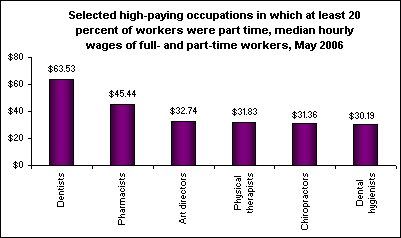
Some high-paying jobs can be part-time jobs. The chart shows occupations in which part-time work was common and in which workers had median wages of more than $30 an hour in May 2006.
The chart data are for both full- and part-time workers; hourly wages of part-timers can be higher or lower than those of their full-time counterparts.
Information in this article is from the Current Population Survey program and the Occupational Employment Statistics program. For more information, see "Flexible work: Adjusting the when and where of your job," by Elka Maria Torpey, Occupational Outlook Quarterly, Summer 2007.
Bureau of Labor Statistics, U.S. Department of Labor, The Economics Daily, Flexible work and part-time jobs at https://www.bls.gov/opub/ted/2007/oct/wk1/art03.htm (visited April 23, 2024).