An official website of the United States government
 United States Department of Labor
An official website of the United States government
United States Department of Labor

The .gov means it's official.
Federal government websites often end in .gov or .mil. Before sharing sensitive information,
make sure you're on a federal government site.

The site is secure.
The
https:// ensures that you are connecting to the official website and that any
information you provide is encrypted and transmitted securely.

| March 2026
What do you do?
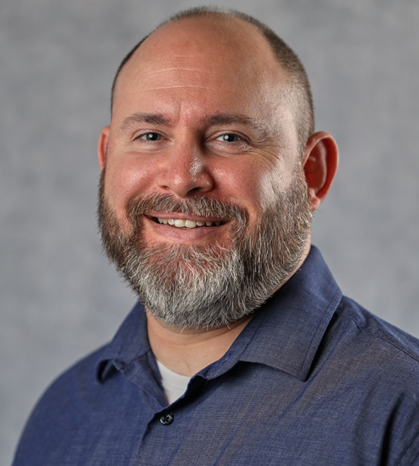
I am an institutional review board (IRB) specialist at a large public university. I review research that involves human subjects to ensure that it is safe and ethical according to federal regulations, state laws, and local policies. I review research protocols before they start, when changes are proposed, and periodically while research is conducted. A research protocol is a document that outlines the proposed research idea and contains a detailed plan for conducting a research study.
What does a typical day look like?
I start my day by reviewing emails to catch up on any communications or postings from the U.S. Food and Drug Administration (FDA), my university’s Office of Research Protection, or the IRB forum from the previous day. Regulations don't change very often, so it's mostly guidance documents or other sorts of notices and announcements that come out from the federal government about how the regulations are being implemented and the thinking behind how the regulations work.
I’ll then look at any responses from researchers about questions I raised about their proposals. Next, I'll move on to reviewing any new studies that have come in, amendments, or continuing reviews. I usually get assigned anywhere from one to three research protocols for review each day. I’ll review the protocols and send them back to the researchers with questions or comments on what they need to change. I typically have 20 to 30 protocols in my queue that are in this back-and-forth process or where I’m waiting for the next step to happen.
Describe some of your other tasks.
Depending on time, I'll work on special projects that my office wants to engage in, such as developing new materials for researchers. I also have lots of administrative work, such as tracking spreadsheets and refining internal policies.
There are opportunities to train new researchers and student researchers who are not familiar with our policies and the requirements of our office. I’m also one of a much smaller group of IRB specialists who do research on the IRB process, and how the determinations that we issue are perceived by the public.
How did you prepare for this career?
I have a bachelor’s degree in biochemistry and molecular biology. I had known for a long time that I was interested in oncology, so that's what I pursued. While working at the U.S. Department of Veterans Affairs (VA) as a cancer researcher, I got a master’s degree in cellular molecular biology.
Has your scientific background helped you in your career?
Knowing the scientific underpinning of things has really helped. I think more than anything what has helped has been my experience as a researcher. Anybody who's done research, regardless of whether it's medical research or social-behavioral research, would benefit from that experience. But I have also known many very good IRB specialists who have no scientific training whatsoever, and whatever scientific knowledge they needed, they picked up on the job.
How did you learn about this career?
I was working at the VA and my research program ended, but I was fortunate enough to be able to get a job in the research administration office at the VA. One of the jobs that I was tasked with was doing IRB intake.
As research applications came in, I would make sure that they were complete, and I would do administrative tasks to help the main IRB administrator. I enjoyed the rules, the regulations, and the clear process of everything. Before, I was very focused on prostate and bladder cancer, but in the new position, I saw all the other types of cancers and also all the other types of medical research that was going on at the VA.
Tell me more about your career path.
After my time at the VA, I moved to a new position where I was a clinical research coordinator for the emergency medicine group at a university. They needed somebody who had the regulatory background to submit research protocols to the IRB, so in that job I was back on the research side, submitting protocols to someone like me at the IRB. I worked there for several years and then took a position as an associate director on the IRB side. After that, I moved to another university as their IRB director, and at the start of last year, I moved into my current position.
The associate director and director roles were management positions. I had staff that I oversaw, and I spent more time working on solutions to proposals or protocols as opposed to reviewing studies. In my current role I’m more of an individual contributor, and I can spend more time reviewing the proposals and studies.
What skills do you need to be successful in this line of work?
When I was in a position where I was hiring people, I always said I can teach anybody the regulations and how to interpret them, but what I need are people who have good customer service skills and who can communicate clearly. We work with researchers who often are very invested in their work, and we may be asking them to change it or telling them that they can't do exactly what they want to do. Sometimes those conversations can get a little heated, but if you can remain calm and cool that will help.
Customer service is important because we have two customers. Our first customer is the people who eventually will be participating in research studies. They're the ones we're looking out for first and foremost. The second customer is our researchers, and we tell them that we're going to help them as much as possible, but we'll still be looking out for our primary customer—the research participants.
What advice would you give to someone interested in this occupation?
Read up on the regulations. I would also suggest talking to the people in the IRB space. They typically work at a hospital or academic institution, and most institutional review boards have some sort of public email address that anyone can reach out to. Explain that you are looking for a mentor, and I'm sure they will start talking to you. We like to help other people who are interested in this profession.
One thing I've always enjoyed about what I've done in the IRB world is that there's no gatekeeping; we are happy to share whatever we have with whoever asks for it. I have had countless times where people need a policy for something, and I've been able to direct them to information publicly available on our website. The same thing has happened in the reverse where I've needed a policy, or I wanted to know how to handle something and there’s been an outpouring of support and advice.
The IRB community is great. There’s not a lot of proprietary knowledge, and as a result it’s very open and collaborative.
What are some of the biggest challenges you see in your work?
Research protocols can sometimes be 100 pages, and you have to read and be able to comprehend all of it. You have to remember all of it so you can compare it to what was said in the protocol, the consent form, or other areas. It's just a lot of reading; it's a lot of mental work.
There are some big personalities in medical research. You can get people who have no idea what it is you're doing, and they think they know what you're doing. I find myself having to explain some of the same concepts over and over again. Some of that is because every year there are new researchers, and we see student research in addition to professional research, and every year there are new students.
What do you like best?
What I enjoy, and perhaps this is because I come from a scientific background, is the wide variety of research that we get to see. I've seen cancer trials; I've seen vaccine trials; I've seen new devices for all sorts of things like prosthetics or surgical tools. I've seen a huge gamut of research, and it’s so interesting.
Also, through my work, I know that I'm helping to contribute to the safe and ethical advancement of science. And that's really important.
Ryan Farrell, "Institutional review board specialist," Career Outlook, U.S. Bureau of Labor Statistics, March 2026.