
An official website of the United States government
 United States Department of Labor
An official website of the United States government
United States Department of Labor

The .gov means it's official.
Federal government websites often end in .gov or .mil. Before sharing sensitive information,
make sure you're on a federal government site.

The site is secure.
The
https:// ensures that you are connecting to the official website and that any
information you provide is encrypted and transmitted securely.
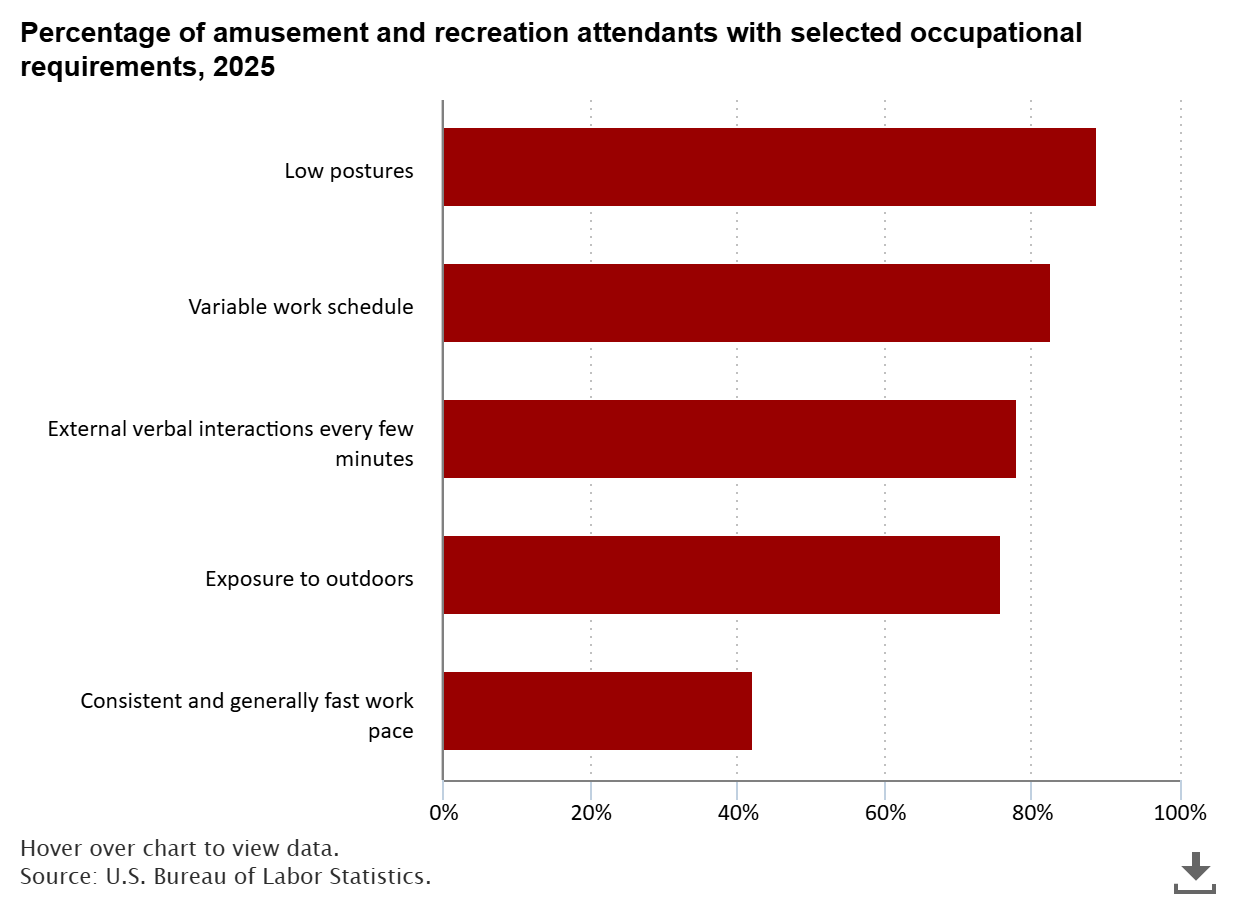
Some of the biggest state fairs take place during the summer and early fall, including the Ohio State Fair, New York State Fair, Minnesota State Fair, The Big E of New England (the only multi-state fair), and the State Fair of Texas. These fairs promote agricultural education and innovation while also offering carnival rides, food, games, music, and more—something for everyone. State fair organizations increase their workforce by hundreds of employees, and businesses providing goods and services at state fairs add hundreds or thousands of temporary workers.
read full article »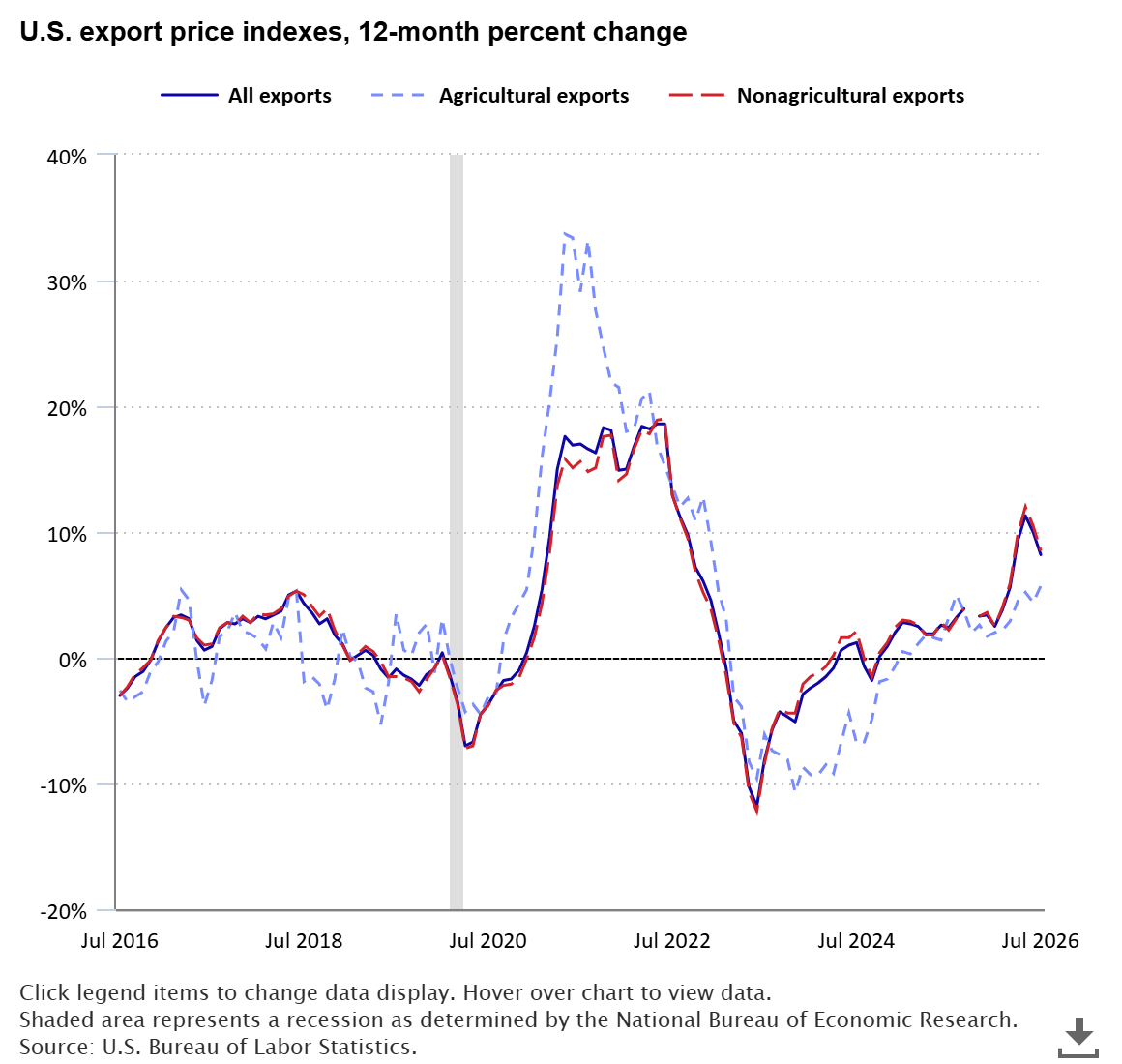
Export prices increased 8.2 percent from July 2025 to July 2026. Prices for agricultural exports increased 5.7 percent, the largest 12-month increase since prices rose 9.3 percent from December 2021 to December 2022. Over the year ended July 2026, prices for nonagricultural exports increased 8.5 percent.
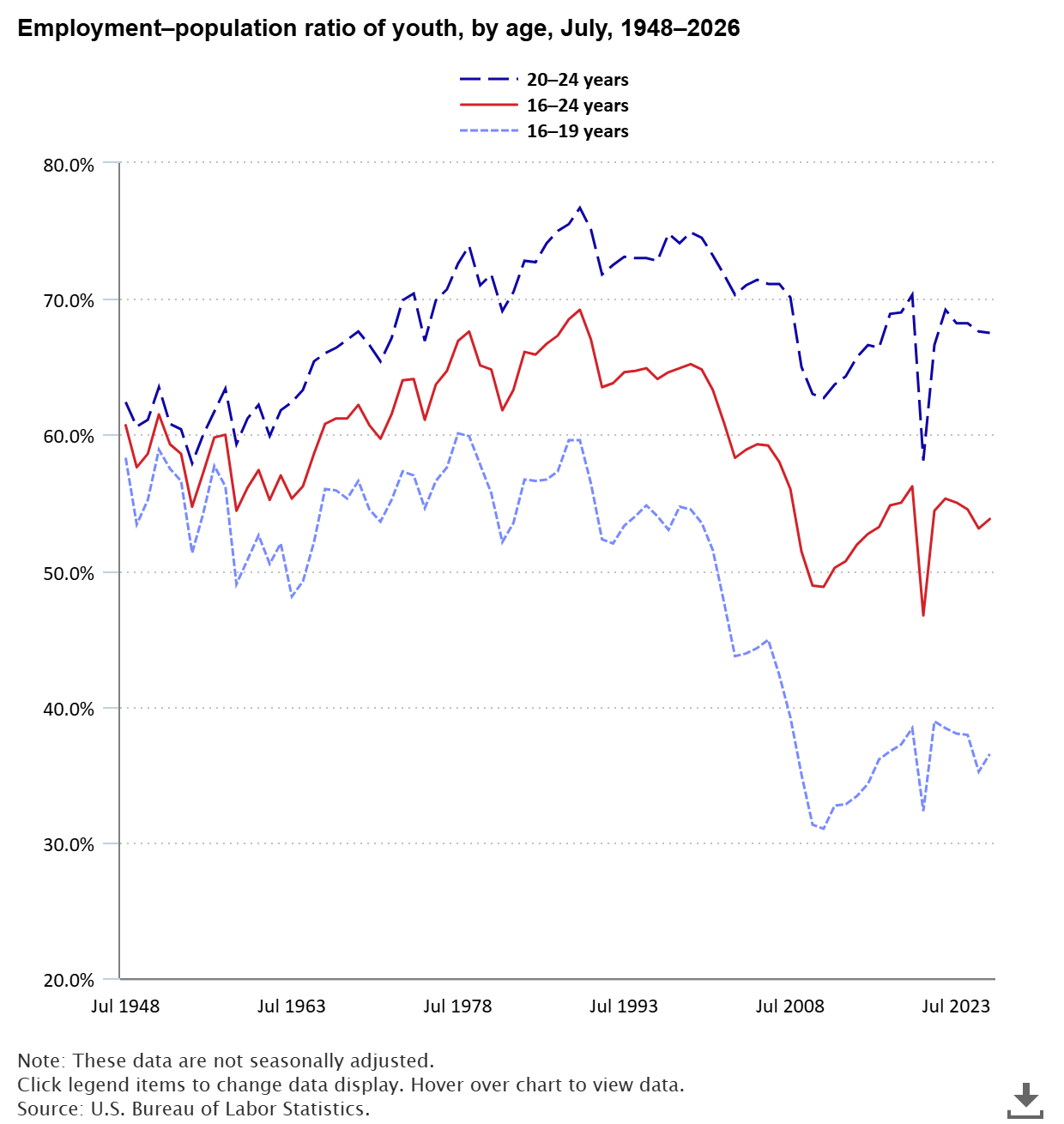
The month of July typically marks the summertime peak in youth employment. The employment–population ratio, which is the percentage of the population that is currently working, was 36.5 percent for teens ages 16 to 19 in July 2026, compared with 67.5 percent for young adults ages 20 to 24. The gap in the employment–population ratio between the two age groups has been about 30 percentage points since the late 2000s.
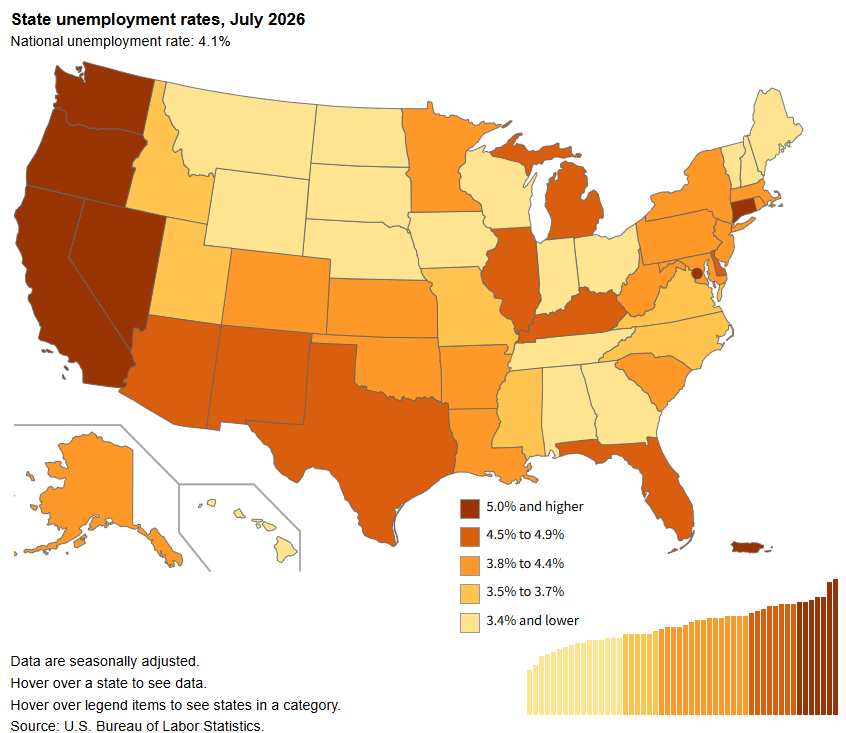
In July 2026, unemployment rates were lower than a month earlier in 10 states and stable in 40 states and the District of Columbia. Twelve states had jobless rate increases from a year earlier, 10 states and the District had decreases, and 28 states had little change. The national unemployment rate, 4.1 percent, changed little both over the month and over the year.
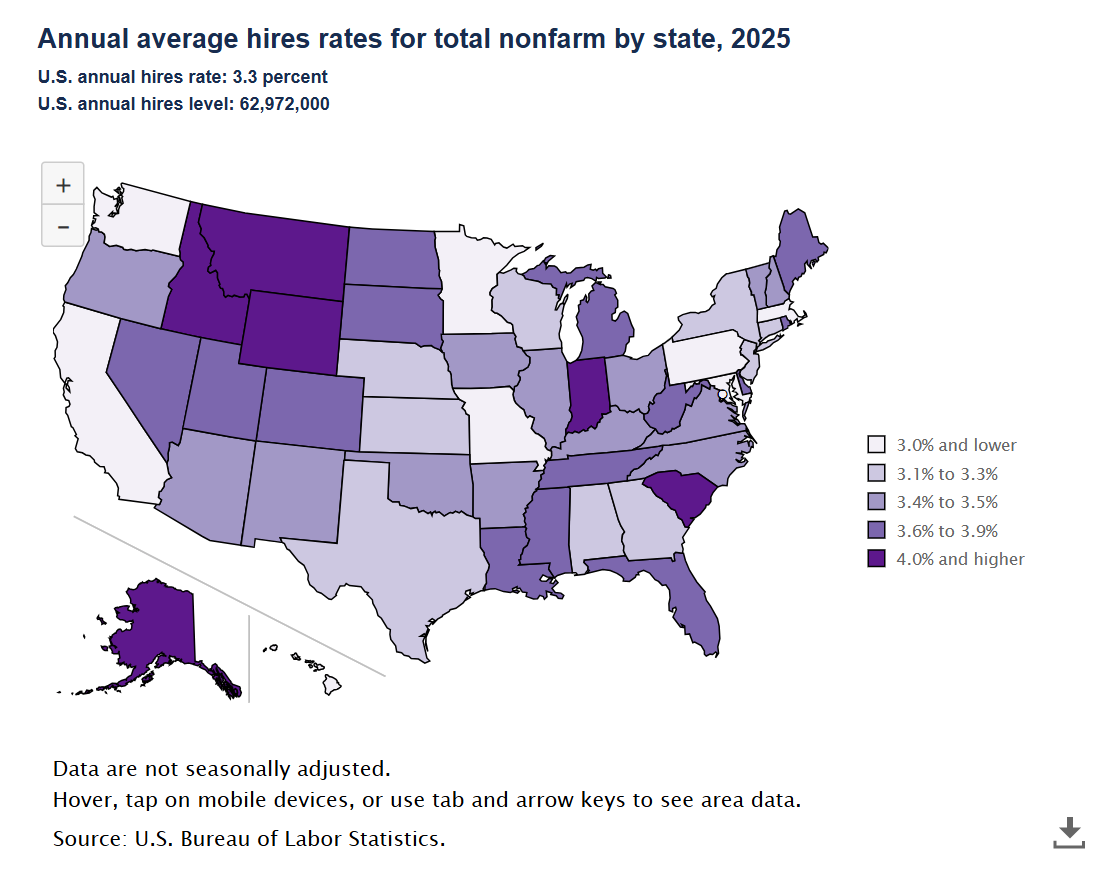
In 2025, annual average hires rates averaged 4.0 percent or higher in 6 states: Alaska (5.2 percent), Montana (4.8 percent), Wyoming (4.5 percent), Idaho (4.2 percent), and Indiana and South Carolina (4.0 percent each). Among these six states, annual hires levels ranged from 158,000 in Wyoming to 1,584,000 in Indiana. Nationally, there were 62,972,000 hires in 2025, and the U.S. annual average hires rate was 3.3 percent.


