Department of Labor Logo United States Department of Labor
Dot gov

The .gov means it's official.
Federal government websites often end in .gov or .mil. Before sharing sensitive information, make sure you're on a federal government site.

Https

The site is secure.
The https:// ensures that you are connecting to the official website and that any information you provide is encrypted and transmitted securely.

Geological and Hydrologic Technicians

Summary

Please enable javascript to play this video.

Video transcript available at https://www.youtube.com/watch?v=wB2nC36pIG4.
Quick Facts: Geological and Hydrologic Technicians
2025 Median Pay $57,150 per year
$27.48 per hour
Typical Entry-Level Education Associate's degree
Work Experience in a Related Occupation None
On-the-job Training Moderate-term on-the-job training
Number of Jobs, 2025 10,300
Job Outlook, 2025–35 2% (Slower than average)
Employment Change, 2025–35 200

What Geological and Hydrologic Technicians Do

Geological and hydrologic technicians support scientists and engineers in exploring, extracting, and monitoring natural resources.

Work Environment

Geological and hydrologic technicians work in offices, laboratories, and the field. Most geological and hydrologic technicians work full time.

How to Become a Geological or Hydrologic Technician

Geological and hydrologic technicians typically need an associate’s degree or 2 years of postsecondary training in applied science or a science-related technology. Some jobs may require a bachelor’s degree. Geological and hydrologic technicians also receive on-the-job training.

Pay

The median annual wage for geological technicians, except hydrologic technicians was $53,350 in May 2025.

The median annual wage for hydrologic technicians was $64,790 in May 2025.

Job Outlook

Overall employment of geological and hydrologic technicians is projected to grow 2 percent from 2025 to 2035, slower than the average for all occupations.

Despite limited employment growth, about 1,400 openings for geological and hydrologic technicians are projected each year, on average, over the decade. Most of those openings are expected to result from the need to replace workers who transfer to different occupations or exit the labor force, such as to retire.

State & Area Data

Explore resources for employment and wages by state and area for geological and hydrologic technicians.

Similar Occupations

Compare the job duties, education, job growth, and pay of geological and hydrologic technicians with similar occupations.

More Information, Including Links to O*NET

Learn more about geological and hydrologic technicians by visiting additional resources, including O*NET, a source on key characteristics of workers and occupations.
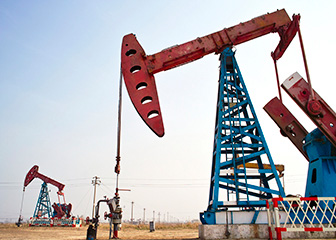

What Geological and Hydrologic Technicians Do About this section

Geological and petroleum technicians
Geological and hydrologic technicians help identify locations that are suitable for oil and gas wells.

Geological and hydrologic technicians support scientists and engineers in exploring, extracting, and monitoring natural resources, such as soil, natural gas, and water.

Duties

Geological and hydrologic technicians typically do the following:

  • Install and maintain laboratory and field equipment
  • Gather samples in the field, such as mud and water, and prepare them for analysis in the laboratory
  • Conduct scientific tests on samples to determine their content and characteristics
  • Record data from tests and compile information from reports, databases, and other sources
  • Prepare reports and maps to identify geological characteristics of areas that may have valuable natural resources

Geological and hydrologic technicians typically specialize either in fieldwork and laboratory study or in analyzing data. However, technicians may have duties that overlap into multiple areas.

In the field, geological and hydrologic technicians use equipment, such as seismic instruments and depth sensors, to gather data. They also use tools, such as shovels and gauges, to collect samples for analysis. In laboratories, these technicians use microscopes, computers, and other equipment to analyze samples for problem-solving and other purposes.

Geological and hydrologic technicians work on teams under the supervision of scientists and engineers. Geological technicians help with tasks such as exploring and developing prospective sites or monitoring the productivity of existing ones. Hydrologic technicians assist with a variety of projects, such as providing information for negotiating water rights.

Geologic and hydrologic technicians also might work with scientists and technicians of other disciplines. For example, these technicians may work with environmental scientists and technicians to identify the potential impacts of drilling on an area’s soil and water quality.

Work Environment About this section

Geological and petroleum technicians
Fieldwork requires technicians to work outdoors, sometimes in remote locations, where they are exposed to all types of weather.

Geological technicians, except hydrologic technicians held about 7,300 jobs in 2025. Some of the largest employers of geological technicians, except hydrologic technicians were as follows:

Architectural, engineering, and related services 43%
Mining, quarrying, and oil and gas extraction 31
Management, scientific, and technical consulting services 5
Educational services; state, local, and private 2
Manufacturing 2

Hydrologic technicians held about 3,000 jobs in 2025. Some of the largest employers of hydrologic technicians were as follows:

Federal government 56%
Professional, scientific, and technical services 11
Local government, excluding education and hospitals 8
Hydroelectric power generation 3
Educational services; state, local, and private 2

Geological and hydrologic technicians work either in fields and laboratories or in offices. Fieldwork requires technicians to be outdoors, sometimes in remote locations, where they are exposed to all types of weather. In addition, technicians may need to stay on location for days or weeks to collect data and monitor equipment. Geological and hydrologic technicians who work in offices spend most of their time on computers to organize and analyze data, write reports, and produce maps.

Work Schedules

Most geological and hydrologic technicians work full time. Technicians generally work standard hours in laboratories and offices but may have irregular schedules in the field.

How to Become a Geological or Hydrologic Technician About this section

Geological and petroleum technicians
Geological and hydrologic technicians use laboratory equipment such as microscopes to analyze samples collected in the field.

Geological and hydrologic technicians typically need at least an associate’s degree in applied science or science-related technology to enter the occupation. Some employers require a bachelor’s degree. Geological and hydrologic technicians also receive on-the-job training.

Education

Although entry-level positions typically require an associate’s degree in applied science or a science-related technology, employers may prefer to hire applicants who have a bachelor’s degree. Geological and hydrologic technician jobs that are data intensive or highly technical may require a bachelor’s degree.

Community colleges and technical institutes may offer programs in geosciences, mining, or a related subject, such as geographic information systems (GIS). Regardless of the program, most students take courses in geology, mathematics, computer science, chemistry, and physics. Schools also may offer internships and cooperative-education programs in which students gain experience while attending school.

Licenses, Certifications, and Registrations

Some geological and hydrologic technicians may be required to have the Occupational Safety & Health Administration (OSHA) Hazardous Waste Operations and Emergency Response Standard (HAZWOPER) certification. HAZWOPER certification includes training in health hazards, personal protective equipment, site safety, recognizing and identifying hazards, and decontamination. Refresher training may be required to maintain certification.

Although not required, certification may indicate professional expertise. Information on certifications is available from CareerOneStop.

Important Qualities

The following are examples of qualities that are important for these workers to perform their duties. For more information, visit the Employment Projections (EP) skills data page.

Analytical skills. Geological and hydrologic technicians evaluate data and samples using a variety of techniques, including laboratory experimentation and computer modeling.

Communication skills. Geological and hydrologic technicians explain their methods and findings through oral and written reports to scientists, engineers, managers, and other technicians.

Critical-thinking skills. Geological and hydrologic technicians must use their judgment when interpreting scientific data and determining what is relevant to their work.

Interpersonal skills. Geological and hydrologic technicians need to be able to work well with others as part of a team.

Physical stamina. To do fieldwork, geological and hydrologic technicians must be able to reach remote locations while carrying testing and sampling equipment.

Training

Geological and hydrologic technicians typically receive on-the-job training to attain competency. Under the supervision of experienced technicians, new technicians gain hands-on experience using field and laboratory equipment and computer software. The length of training may vary from 1 to 12 months.

Pay About this section

Geological and Hydrologic Technicians

Median annual wages, May 2025

Hydrologic technicians

$64,790

Life, physical, and social science technicians

$59,510

Geological and hydrologic technicians

$57,150

Geological technicians, except hydrologic technicians

$53,350

Total, all occupations

$50,980


The median annual wage for geological technicians, except hydrologic technicians was $53,350 in May 2025. The median wage is the wage at which half the workers in an occupation earned more than that amount and half earned less. The lowest 10 percent earned less than $35,770, and the highest 10 percent earned more than $99,560.

The median annual wage for hydrologic technicians was $64,790 in May 2025. The lowest 10 percent earned less than $44,950, and the highest 10 percent earned more than $100,480.

In May 2025, the median annual wages for geological technicians, except hydrologic technicians in some of the top industries in which they worked were as follows:

Manufacturing $100,390
Management, scientific, and technical consulting services 59,100
Educational services; state, local, and private 53,610
Mining, quarrying, and oil and gas extraction 53,480
Architectural, engineering, and related services 50,290

In May 2025, the median annual wages for hydrologic technicians in some of the top industries in which they worked were as follows:

Hydroelectric power generation $81,860
Federal government 71,780
Local government, excluding education and hospitals 64,880
Professional, scientific, and technical services 52,870
Educational services; state, local, and private 49,500

Most geological and hydrologic technicians work full time. Technicians generally work standard hours in laboratories and offices but may have irregular schedules in the field.

Job Outlook About this section

Geological and Hydrologic Technicians

Percent change in employment, projected 2025–35

Life, physical, and social science technicians

5%

Geological technicians, except hydrologic technicians

4%

Total, all occupations

3%

Geological and hydrologic technicians

2%

Hydrologic technicians

-1%


Overall employment of geological and hydrologic technicians is projected to grow 2 percent from 2025 to 2035, slower than the average for all occupations.

Despite limited employment growth, about 1,400 openings for geological and hydrologic technicians are projected each year, on average, over the decade. Most of those openings are expected to result from the need to replace workers who transfer to different occupations or exit the labor force, such as to retire.

Employment

Projected employment of geological and hydrologic technicians varies by occupation (see table).

Demand for natural gas, along with exploration and management of resources such as minerals and water, is expected to increase demand for geological exploration and extraction. However, the use of drones and other technology in mining exploration may replace the need for some geological technicians.

Many hydrologic technicians are employed by the federal government and therefore, future employment will depend in large part on the amount of federal funding available for related activities and research.

Employment projections data for geological and hydrologic technicians, 2025–35
Occupational Title SOC Code Employment, 2025 Projected Employment, 2035 Change, 2025–35 Employment by Industry
Percent Numeric

Note:
Employment subcategories do not necessarily add to higher categories due to rounding.
Employment and projected employment change values are rounded to the nearest 100 or percent.
Data is unavailable for values denoted with a "—".
Source: U.S. Bureau of Labor Statistics.

Geological and hydrologic technicians

10,300 10,500 2 200

Geological technicians, except hydrologic technicians

19-4043 7,300 7,600 4 300 Get data

Hydrologic technicians

19-4044 3,000 3,000 -1 0 Get data

State & Area Data About this section

Occupational Employment and Wage Statistics (OEWS)

The Occupational Employment and Wage Statistics (OEWS) program produces employment and wage estimates annually for over 800 occupations. These estimates are available for the nation as a whole, for individual states, and for metropolitan and nonmetropolitan areas. The link below goes to OEWS data maps for employment and wages by state and area. Use the dropdown boxes to select an occupation.

Projections Central

Occupational employment projections are developed for all states by Labor Market Information (LMI) or individual state Employment Projections offices. All state projections data are available at https://projectionscentral.org. Information on this site allows projected employment growth for an occupation to be compared among states or to be compared within one state. In addition, states may produce projections for areas; there are links to each state’s websites where these data may be retrieved.

CareerOneStop

CareerOneStop includes hundreds of occupational profiles with data available by state and metro area. There are links in the left-hand side menu to compare occupational employment by state and occupational wages by local area or metro area. There is also a salary info tool to search for wages by zip code.

Similar Occupations About this section

This table shows a list of occupations with job duties that are similar to those of geological and hydrologic technicians.

Occupation Job Duties ENTRY-LEVEL EDUCATION Help on Entry-Level Education 2025 MEDIAN PAY Help on Median Pay
Cartographers and photogrammetrists Cartographers and Photogrammetrists

Cartographers and photogrammetrists collect, analyze, and interpret geographic information to create and update maps and related products.

Bachelor's degree $81,390
Civil engineering technicians Civil Engineering Technologists and Technicians

Civil engineering technologists and technicians help civil engineers plan, design, and build infrastructure and development projects.

Associate's degree $64,950
Civil engineers Civil Engineers

Civil engineers plan, design, and supervise the construction and maintenance of building and infrastructure projects.

Bachelor's degree $100,840
Geoscientists Geoscientists

Geoscientists study the physical aspects of the Earth.

Bachelor's degree $101,920
Hydrologists Hydrologists

Hydrologists study water and how it moves across and through the Earth’s crust.

Bachelor's degree $96,600
Petroleum engineers Petroleum Engineers

Petroleum engineers devise methods to improve oil and gas extraction and production.

Bachelor's degree $144,910
Surveying and mapping technicians Surveying and Mapping Technicians

Surveying and mapping technicians collect data and make maps of the Earth's surface.

High school diploma or equivalent $54,240
Suggested citation:

Bureau of Labor Statistics, U.S. Department of Labor, Occupational Outlook Handbook, Geological and Hydrologic Technicians,
at https://www.bls.gov/ooh/life-physical-and-social-science/geological-and-petroleum-technicians.htm (visited August 27, 2026).

Last modified date: August 27, 2026

What They Do

The What They Do tab describes the typical duties and responsibilities of workers in the occupation, including what tools and equipment they use and how closely they are supervised. This tab also covers different types of occupational specialties.

Work Environment

The Work Environment tab includes the number of jobs held in the occupation and describes the workplace, the level of physical activity expected, and typical hours worked. It may also discuss the major industries that employed the occupation. This tab may also describe opportunities for part-time work, the amount and type of travel required, any safety equipment that is used, and the risk of injury that workers may face.

How to Become One

The How to Become One tab describes how to prepare for a job in the occupation. This tab can include information on education, training, work experience, licensing and certification, and important qualities that are required or helpful for entering or working in the occupation.

Pay

The Pay tab describes typical earnings and how workers in the occupation are compensated—annual salaries, hourly wages, commissions, tips, or bonuses. Within every occupation, earnings vary by experience, responsibility, performance, tenure, and geographic area. For most profiles, this tab has a table with wages in the major industries employing the occupation. It does not include pay for self-employed workers, agriculture workers, or workers in private households because these data are not collected by the Occupational Employment and Wage Statistics (OEWS) survey, the source of BLS wage data in the OOH.

State & Area Data

The State and Area Data tab provides links to state and area occupational data from the Occupational Employment and Wage Statistics (OEWS) program, state projections data from Projections Central, and occupational information from the Department of Labor's CareerOneStop.

Job Outlook

The Job Outlook tab describes the factors that affect employment growth or decline in the occupation, and in some instances, describes the relationship between the number of job seekers and the number of job openings.

Similar Occupations

The Similar Occupations tab describes occupations that share similar duties, skills, interests, education, or training with the occupation covered in the profile.

Contacts for More Information

The More Information tab provides the Internet addresses of associations, government agencies, unions, and other organizations that can provide additional information on the occupation. This tab also includes links to relevant occupational information from the Occupational Information Network (O*NET).

2025 Median Pay

The wage at which half of the workers in the occupation earned more than that amount and half earned less. Median wage data are from the BLS Occupational Employment and Wage Statistics survey. In May 2025, the median annual wage for all workers was $50,980.

On-the-job Training

Additional training needed (postemployment) to attain competency in the skills needed in this occupation.

Entry-level Education

Typical level of education that most workers need to enter this occupation.

Work experience in a related occupation

Work experience that is commonly considered necessary by employers, or is a commonly accepted substitute for more formal types of training or education.

Number of Jobs, 2025

The employment, or size, of this occupation in 2025, which is the base year of the 2025–35 employment projections.

Job Outlook, 2025-35

The projected percent change in employment from 2025 to 2035. The average growth rate for all occupations is 3 percent.

Employment Change, 2025-35

The projected numeric change in employment from 2025 to 2035.

Entry-level Education

Typical level of education that most workers need to enter this occupation.

On-the-job Training

Additional training needed (postemployment) to attain competency in the skills needed in this occupation.

Employment Change, projected 2025-35

The projected numeric change in employment from 2025 to 2035.

Growth Rate (Projected)

The percent change of employment for each occupation from 2025 to 2035.

Projected Number of New Jobs

The projected numeric change in employment from 2025 to 2035.

Projected Growth Rate

The projected percent change in employment from 2025 to 2035.

2025 Median Pay

The wage at which half of the workers in the occupation earned more than that amount and half earned less. Median wage data are from the BLS Occupational Employment and Wage Statistics survey. In May 2025, the median annual wage for all workers was $50,980.