An official website of the United States government
 United States Department of Labor
An official website of the United States government
United States Department of Labor

The .gov means it's official.
Federal government websites often end in .gov or .mil. Before sharing sensitive information,
make sure you're on a federal government site.

The site is secure.
The
https:// ensures that you are connecting to the official website and that any
information you provide is encrypted and transmitted securely.


| May 2026
Learn more about this occupation in the Occupational Outlook Handbook.
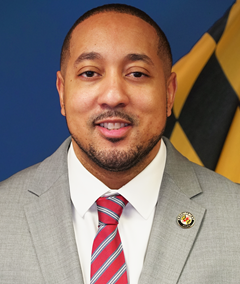
I oversee procurement for the state of Maryland. Procurement is the sourcing, negotiating, and purchasing of goods and services. I am responsible for both the operations of the Office of State Procurement and the policies that we enact and enforce.
We do about 13 billion dollars of procurement purchases for state executive agencies, and that number is increased if we look at nonexecutive agencies, the University System of Maryland, or independent agencies and commissions.
The amazing part of my job is there's no typical day. I may spend time working with the governor’s office on the governor's priorities related to supporting the economy and business partners of all sizes in Maryland. I also have time focused on working with the team on the operations side, especially as it relates to major procurements, the timelines associated with those procurements, and ensuring the very best value for state agencies and for Maryland.
There’s outreach work: making sure that we're highlighting our priorities and the support services that we're providing to our constituents, both our business partners and Marylanders, who are in some instances the direct beneficiaries of those products and services.
I also support the different agencies with any escalations and challenge points, operating as the centralized voice for the state concerning best practices training or just resolving procurement challenges in general.
Throughout the day, there's going to be meetings, conversations, and email correspondence that touch on all of those items.
I've always had an infatuation with understanding business and supporting customers, along with an affinity for public service. Those things kind of marry when you walk into the procurement space because, in essence, you're a business advisor for the government; and here at the state, I'm a business advisor for state agencies in the state executive branch.
Procurement requires an understanding of business and how our business partners operate in the procurement landscape. And that’s what drew me in and continued my path throughout the years.
My career path was quite nontraditional. After high school, I enlisted in the Air Force. This was 2 weeks after 9/11. After 4 years in the Air Force, I moved into a private sector information technology (IT) position. I worked my way up through various IT positions, from help desk technician to network engineer. At the same time, I pursued a bachelor’s degree in business and then a dual master’s degree in business administration and acquisition supply chain management.
While completing my master’s degrees, I moved into the federal government. I started with procurement and contracting work on the federal side and eventually moved into management and supervisory positions. I worked at a number of federal agencies or departments, such as the U.S. Environmental Protection Agency, the U.S. Department of Health and Human Services, and the U.S. Small Business Administration. In my last federal position, I was the director of the Office of Government Contracting at the U.S. Small Business Administration.
I then moved to deputy chief procurement officer for the state of Maryland, and from that position, was nominated by the governor for my current position.
As the chief procurement officer, you have to be both political and a subject matter expert. You’re called upon heavily from the governor's office to be a subject matter expert. You also have to be an executive leader, and be political and charismatic enough to sway audiences. It can be highly political with lobbying efforts from business interests or political constituencies. You'll spend a lot of time working with legislators in the General Assembly.
You have to be business savvy and understand what changes to the economy or federal policy will have on your industrial base and the state economy. The state of Maryland is distinctly different because of our proximity to the White House and our reliance on federal funding. We have to be dynamic to deal with any changes in federal policy or funding.
I think some things are innate but it's also just taking on the challenge and being resilient. I started as an intern, and I've operated in nearly every type of position, so I know what the expectations of each position are, and I know how procurement systems function, so I've had the benefit of longevity in the career.
It’s been helpful for my career to move around and gain experience in different organizations in both the public and private sectors. The myriad of challenges that I’ve had to take on have prepared me for additional challenges and opportunities and have allowed me to really support the state of Maryland.
You should have business discipline and understand how business transactions occur. You should be customer service oriented. Procurement officers may need to be self-starters and take initiative, especially if a formal on-the-job training program is not provided for their role. We have fewer resources at the state level, and our procurement officers have to learn the ropes on their own.
It's really asking myself, “Is there more we can do?” and trying to push folks towards those bodacious, stretch goals. My standards are extremely high, and as a leader I have to push people to their maximum ability.
You have to ask people to stretch, especially when you have an ambitious administration that wants the very best for state employees and for the residents of the state. Everything that we do is impactful, so although I enjoy having the easier days, there's always more work to be done. It's asking, “Have we done enough?” and generally the answer is “no” because we care too much about our constituents and we need to always find ways to do more.
The impact. Knowing that we're doing the things that are building generational wealth for underrepresented communities and that we are supporting the economy of our state. It’s public service. We have chosen service before self.
Enjoy the journey. If you're just entering, I would say this is a space where you can truly be impactful. You are at the epicenter of business transactions and the agency accomplishing their mission. Without the office of procurement and without procurement professionals, there's no way that the government will be able to complete its mission.
It's a great career, and you get to learn about all the different programs and agencies within government because you're supporting them as a business advisor. Make sure you’re getting a diverse range of experiences and learning as much as possible. Take on challenges because through those challenges you find unique outcomes, and you learn, and build upon those successes to take on the next challenge.
Ryan Farrell, "Chief procurement officer," Career Outlook, U.S. Bureau of Labor Statistics, May 2026.