Department of Labor Logo United States Department of Labor
Dot gov

The .gov means it's official.
Federal government websites often end in .gov or .mil. Before sharing sensitive information, make sure you're on a federal government site.

Https

The site is secure.
The https:// ensures that you are connecting to the official website and that any information you provide is encrypted and transmitted securely.

Summary

Please enable javascript to play this video.

Video transcript available at https://www.youtube.com/watch?v=6GukCvwaEnM.
Quick Facts: Mining and Geological Engineers
2024 Median Pay $101,020 per year
$48.57 per hour
Typical Entry-Level Education Bachelor's degree
Work Experience in a Related Occupation None
On-the-job Training None
Number of Jobs, 2024 7,000
Job Outlook, 2024–34 1% (Slower than average)
Employment Change, 2024–34 0

What Mining and Geological Engineers Do

Mining and geological engineers use geological and engineering principles to design ways to safely and efficiently extract minerals and other resources.

Work Environment

Many mining and geological engineers work at mining operations, such as mineral mines or sand-and-gravel quarries, in remote areas or near cities and towns. Others work in offices or onsite for engineering services firms. Most work full time.

How to Become a Mining or Geological Engineer

Mining and geological engineers typically need a bachelor’s degree in mining or geological engineering or a related field to enter the occupation.

Pay

The median annual wage for mining and geological engineers was $101,020 in May 2024.

Job Outlook

Employment of mining and geological engineers is projected to grow 1 percent from 2024 to 2034, slower than the average for all occupations.

Despite limited employment growth, about 400 openings for mining and geological engineers are projected each year, on average, over the decade. Most of those openings are expected to result from the need to replace workers who transfer to different occupations or exit the labor force, such as to retire.

State & Area Data

Explore resources for employment and wages by state and area for mining and geological engineers.

Similar Occupations

Compare the job duties, education, job growth, and pay of mining and geological engineers with similar occupations.

More Information, Including Links to O*NET

Learn more about mining and geological engineers by visiting additional resources, including O*NET, a source on key characteristics of workers and occupations.
What Mining and Geological Engineers Do About this section

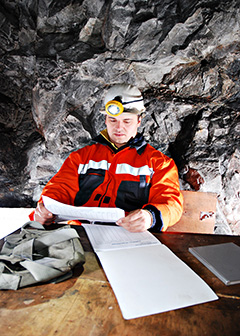
Mining engineer sits inside mine and examines engineering diagrams.
Mining and geological engineers prepare technical reports for miners, engineers, and managers.

Mining and geological engineers use geological and engineering principles to design ways to safely and efficiently extract minerals and other resources.

Duties

Mining and geological engineers typically do the following:

  • Design open-pit and underground mines
  • Supervise the construction of mine shafts and tunnels
  • Devise methods for transporting minerals to processing plants
  • Prepare technical reports for miners, engineers, and managers
  • Monitor mine production to assess the effectiveness of operations
  • Provide solutions to problems related to land reclamation, water and air pollution, and sustainability
  • Ensure that mines are operated in safe and environmentally sound ways

Geological engineers conduct subsurface surveys to identify the characteristics of potential land or mining development sites. They analyze survey results and prepare technical reports on the presence and extraction potential of minerals or other geological deposits. Once a site is identified, they plan how the resources will be extracted in efficient and environmentally sound ways.

Mining engineers typically design and develop mines and determine the best way to extract resources to get the most out of deposits. They may specialize in a particular mineral or resource, such as coal or gold.

Some mining engineers work with geoscientists and metallurgical engineers to find and evaluate ore deposits. Other mining engineers develop new equipment or direct mineral-processing operations to separate minerals from dirt, rock, and other materials.

Mining safety engineers use best practices and their knowledge of mine design to ensure workers’ safety and to maintain compliance with state and federal safety regulations. They inspect the walls and roofs of mines, monitor the air quality, and examine mining equipment for possible hazards.

For information on workers who devise methods to improve oil and gas extraction and production, see the profile on petroleum engineers.

Work Environment About this section

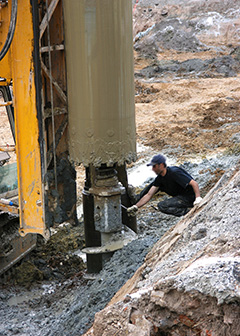
Worker adjusting mining equipment.
Mining and geological engineers must visit the worksite to keep close watch on the progression of their designs.

Mining and geological engineers held about 7,000 jobs in 2024. The largest employers of mining and geological engineers were as follows:

Engineering services 32%
Metal ore mining 17
Coal mining 11
Support activities for mining 5
Oil and gas extraction 2

Many work at mining operations, such as mineral mines or sand-and-gravel quarries, in remote areas or near cities and towns. Others work in offices or onsite for engineering services firms.

When working onsite, mining and geological engineers must follow strict safety procedures. They may need to wear personal protective equipment, such as safety glasses, hard hats, or steel-toed boots, to reduce the risk of injury. Mining and geological engineers may work outdoors in all weather conditions while onsite.

Work Schedules

Most mining and geological engineers work full time. The remoteness of some mining locations gives rise to variable schedules and weeks during which they work more hours than usual.

How to Become a Mining or Geological Engineer About this section

A group of engineers discussing project plans.
A bachelor’s degree from an accredited engineering program is typically required to become a mining or geological engineer.

Mining and geological engineers, including mining safety engineers, typically need a bachelor’s degree in mining or geological engineering or a related field to enter the occupation.

Education

High school students interested in becoming a mining or geological engineer should take classes in math and science.

College students typically pursue a bachelor’s degree in mining or geological engineering or a related field. Employers sometimes hire candidates who have degrees in fields such as civil or environmental engineering or geosciences.

Bachelor’s degree programs in mining engineering may include courses in geology, thermodynamics, and mine design and safety. Bachelor’s degree programs in geological engineering may include courses in geology, chemistry, and fluid mechanics. Both types of programs also include laboratory and field work, along with academic study.

Licenses, Certifications, and Registrations

Licensure is not required for entry-level mining and geological engineers.

Experienced engineers may obtain a Professional Engineer (PE) license, which allows them to oversee the work of other engineers, sign off on projects, and provide services directly to the public.

State licensure generally requires a bachelor’s degree or higher from an accredited engineering program, a passing score on the Fundamentals of Engineering (FE) exam, several years of relevant work experience, and a passing score on the PE exam.

In several states, engineers must earn continuing education credits to keep their licenses. Most states recognize licenses from other states, provided that licensure requirements in the other states meet or exceed the first state’s own requirements. Information on state licensing board requirements is available from CareerOneStop.

Important Qualities

The following are examples of qualities that are important for these workers to perform their duties. For more information, visit the Employment Projections (EP) skills data page.

Analytical skills. Mining and geological engineers must take many factors into account when evaluating new mine locations and designing facilities. They also must plan for the restoration of the surrounding environment after operations end.

Detail oriented. Mining and geological engineers must ensure that engineering plans and instructions are accurate and safe.

Organizational skills. In planning mines’ operations, mineral processing, and environmental reclamation, these engineers must put work plans into a coherent, logical sequence.

Math skills. Mining and geological engineers use the principles of calculus, trigonometry, and other advanced topics in math for analysis, design, and troubleshooting in their work.

Problem-solving skills. Mining and geological engineers work on complex projects that require the ability to anticipate and resolve problems as they arise.

Writing skills. Mining and geological engineers must prepare reports and instructions for other workers. Therefore, they must be able to write clearly so that others can easily understand their ideas and plans.

Advancement

Engineers may advance to become technical specialists or supervisors. Some workers may go on to become engineering managers, overseeing a team of engineers and technicians.

Pay About this section

Mining and Geological Engineers

Median annual wages, May 2024

Engineers

$106,070

Mining and geological engineers, including mining safety engineers

$101,020

Total, all occupations

$49,500


The median annual wage for mining and geological engineers was $101,020 in May 2024. The median wage is the wage at which half the workers in an occupation earned more than that amount and half earned less. The lowest 10 percent earned less than $62,500, and the highest 10 percent earned more than $163,740.

In May 2024, the median annual wages for mining and geological engineers in the top industries in which they worked were as follows:

Oil and gas extraction $156,200
Metal ore mining 102,610
Coal mining 98,500
Support activities for mining 98,490
Engineering services 96,460

Most mining and geological engineers work full time. The remoteness of some mining locations gives rise to variable schedules and weeks during which they work more than usual.

Job Outlook About this section

Mining and Geological Engineers

Percent change in employment, projected 2024–34

Engineers

7%

Total, all occupations

3%

Mining and geological engineers, including mining safety engineers

1%


Employment of mining and geological engineers is projected to grow 1 percent from 2024 to 2034, slower than the average for all occupations.

Despite limited employment growth, about 400 openings for mining and geological engineers are projected each year, on average, over the decade. Most of those openings are expected to result from the need to replace workers who transfer to different occupations or exit the labor force, such as to retire.

Employment

Employment growth for mining and geological engineers will depend on demand for coal, metals, and minerals. These resources are used in many products, including construction materials, electric vehicles, smartphones, and computers. Rising demand for these products may create some jobs for mining and geological engineers. However, increased automation of mining activities is expected to offset some of this growth.

Employment projections data for mining and geological engineers, 2024–34
Occupational Title SOC Code Employment, 2024 Projected Employment, 2034 Change, 2024–34 Employment by Industry
Percent Numeric

SOURCE: U.S. Bureau of Labor Statistics, Employment Projections program

Mining and geological engineers, including mining safety engineers

17-2151 7,000 7,000 1 0 Get data

State & Area Data About this section

Occupational Employment and Wage Statistics (OEWS)

The Occupational Employment and Wage Statistics (OEWS) program produces employment and wage estimates annually for over 800 occupations. These estimates are available for the nation as a whole, for individual states, and for metropolitan and nonmetropolitan areas. The link below goes to OEWS data maps for employment and wages by state and area. Use the dropdown boxes to select an occupation.

Projections Central

Occupational employment projections are developed for all states by Labor Market Information (LMI) or individual state Employment Projections offices. All state projections data are available at www.projectionscentral.org. Information on this site allows projected employment growth for an occupation to be compared among states or to be compared within one state. In addition, states may produce projections for areas; there are links to each state’s websites where these data may be retrieved.

CareerOneStop

CareerOneStop includes hundreds of occupational profiles with data available by state and metro area. There are links in the left-hand side menu to compare occupational employment by state and occupational wages by local area or metro area. There is also a salary info tool to search for wages by zip code.

Similar Occupations About this section

This table shows a list of occupations with job duties that are similar to those of mining and geological engineers.

Occupation Job Duties ENTRY-LEVEL EDUCATION Help on Entry-Level Education 2024 MEDIAN PAY Help on Median Pay
Architectural and engineering managers Architectural and Engineering Managers

Architectural and engineering managers plan, direct, and coordinate activities in the fields of architecture and engineering.

Bachelor's degree $167,740
Civil engineers Civil Engineers

Civil engineers plan, design, and supervise the construction and maintenance of building and infrastructure projects.

Bachelor's degree $99,590
Environmental scientists and specialists Environmental Scientists and Specialists

Environmental scientists and specialists conduct research or investigations to protect the environment or human health.

Bachelor's degree $80,060
Geological and petroleum technicians Geological and Hydrologic Technicians

Geological and hydrologic technicians support scientists and engineers in exploring, extracting, and monitoring natural resources.

Associate's degree $50,510
Geoscientists Geoscientists

Geoscientists study the physical aspects of the Earth.

Bachelor's degree $99,240
Hydrologists Hydrologists

Hydrologists study water and how it moves across and through the Earth’s crust.

Bachelor's degree $92,060
Mechanical engineers Mechanical Engineers

Mechanical engineers design, develop, build, and test mechanical and thermal sensors and devices.

Bachelor's degree $102,320
Petroleum engineers Petroleum Engineers

Petroleum engineers devise methods to improve oil and gas extraction and production.

Bachelor's degree $141,280
Sales engineers Sales Engineers

Sales engineers sell business products or services, such as software or support, that require technical expertise.

Bachelor's degree $121,520
Health and safety engineers Health and Safety Engineers

Health and safety engineers apply their knowledge of industrial processes, mechanics, psychology, and other disciplines to promote worksite or product safety.

Bachelor's degree $109,660
Suggested citation:

Bureau of Labor Statistics, U.S. Department of Labor, Occupational Outlook Handbook, Mining and Geological Engineers,
at https://www.bls.gov/ooh/architecture-and-engineering/mining-and-geological-engineers.htm (visited May 11, 2026).

Last modified date: April 22, 2026

What They Do

The What They Do tab describes the typical duties and responsibilities of workers in the occupation, including what tools and equipment they use and how closely they are supervised. This tab also covers different types of occupational specialties.

Work Environment

The Work Environment tab includes the number of jobs held in the occupation and describes the workplace, the level of physical activity expected, and typical hours worked. It may also discuss the major industries that employed the occupation. This tab may also describe opportunities for part-time work, the amount and type of travel required, any safety equipment that is used, and the risk of injury that workers may face.

How to Become One

The How to Become One tab describes how to prepare for a job in the occupation. This tab can include information on education, training, work experience, licensing and certification, and important qualities that are required or helpful for entering or working in the occupation.

Pay

The Pay tab describes typical earnings and how workers in the occupation are compensated—annual salaries, hourly wages, commissions, tips, or bonuses. Within every occupation, earnings vary by experience, responsibility, performance, tenure, and geographic area. For most profiles, this tab has a table with wages in the major industries employing the occupation. It does not include pay for self-employed workers, agriculture workers, or workers in private households because these data are not collected by the Occupational Employment and Wage Statistics (OEWS) survey, the source of BLS wage data in the OOH.

State & Area Data

The State and Area Data tab provides links to state and area occupational data from the Occupational Employment and Wage Statistics (OEWS) program, state projections data from Projections Central, and occupational information from the Department of Labor's CareerOneStop.

Job Outlook

The Job Outlook tab describes the factors that affect employment growth or decline in the occupation, and in some instances, describes the relationship between the number of job seekers and the number of job openings.

Similar Occupations

The Similar Occupations tab describes occupations that share similar duties, skills, interests, education, or training with the occupation covered in the profile.

Contacts for More Information

The More Information tab provides the Internet addresses of associations, government agencies, unions, and other organizations that can provide additional information on the occupation. This tab also includes links to relevant occupational information from the Occupational Information Network (O*NET).

2024 Median Pay

The wage at which half of the workers in the occupation earned more than that amount and half earned less. Median wage data are from the BLS Occupational Employment and Wage Statistics survey. In May 2024, the median annual wage for all workers was $49,500.

On-the-job Training

Additional training needed (postemployment) to attain competency in the skills needed in this occupation.

Entry-level Education

Typical level of education that most workers need to enter this occupation.

Work experience in a related occupation

Work experience that is commonly considered necessary by employers, or is a commonly accepted substitute for more formal types of training or education.

Number of Jobs, 2024

The employment, or size, of this occupation in 2024, which is the base year of the 2024–34 employment projections.

Job Outlook, 2024-34

The projected percent change in employment from 2024 to 2034. The average growth rate for all occupations is 3 percent.

Employment Change, 2024-34

The projected numeric change in employment from 2024 to 2034.

Entry-level Education

Typical level of education that most workers need to enter this occupation.

On-the-job Training

Additional training needed (postemployment) to attain competency in the skills needed in this occupation.

Employment Change, projected 2024-34

The projected numeric change in employment from 2024 to 2034.

Growth Rate (Projected)

The percent change of employment for each occupation from 2024 to 2034.

Projected Number of New Jobs

The projected numeric change in employment from 2024 to 2034.

Projected Growth Rate

The projected percent change in employment from 2024 to 2034.

2024 Median Pay

The wage at which half of the workers in the occupation earned more than that amount and half earned less. Median wage data are from the BLS Occupational Employment and Wage Statistics survey. In May 2024, the median annual wage for all workers was $49,500.