An official website of the United States government
 United States Department of Labor
An official website of the United States government
United States Department of Labor

The .gov means it's official.
Federal government websites often end in .gov or .mil. Before sharing sensitive information,
make sure you're on a federal government site.

The site is secure.
The
https:// ensures that you are connecting to the official website and that any
information you provide is encrypted and transmitted securely.


The Consumer Price Index (CPI) for public transportation includes airline fares, other intercity transportation, and intracity transportation.
This factsheet describes the methods for measuring other intercity transportation and intracity transportation. Information on airline fares can be found in the Measuring Price Change in the CPI: Airline Fares factsheet.
Other intercity transportation includes bus, train, and ship fares carrying passengers between different cities. Intracity transportation includes mass transit and vehicles for hire carrying passengers within one metropolitan area.
Intercity bus fares include fares for all bus transportation which originates within the sampled area and terminates outside the sampled area. It excludes charter trips which run only during rush hours and are used mostly by commuters. Intercity bus fares also exclude trips that are not regularly scheduled and are limited to members of certain groups, or are part of a tour package that include food, lodging, etc.
Intercity train fares include one-way fares for all long-distance passenger train transportation that originate within the sampled area and terminate outside the sampled area. Intercity train fares exclude fares for short-distance intracity mass transit trains, including rapid rail transit, light rail, and commuter trains.
Ship fares include all fares for national or international travel on passenger cruise ship carriers, (e.g., ocean liner, cruise ship, river cruise, etc.). Only passenger cruise ships with stateroom accommodations and voyages that last over 24 hours are eligible for pricing. It excludes chartered boat services, commuter boat services, dining cruises and sightseeing boat tours. Ship fares also exclude separate fees for travel not included in the cruise fares such as airfare or land fares to the port of origin or from the port of destination. Deposits, offshore excursions, and onboard credits or bonuses are excluded from pricing. Cruise packages that include air or land travel are ineligible.
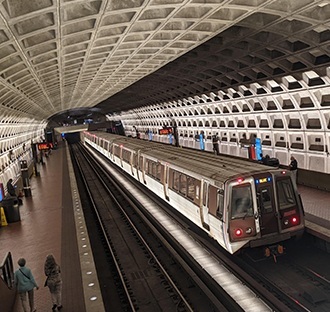
Intracity mass transit includes fares charged for specific trips taken on any type of local mass transit (e.g., bus, subway, trolley, light rail, commuter train, and passenger ferry) and shared mobility (e.g., the renting or sharing of bikes, scooters, and mopeds). Fares may be paid by cash, farecard/smartcard, weekly pass, monthly pass, multiple ride ticket, student fares, memberships, or any other applicable rate schedule. Intracity mass transit excludes fares charged for intercity mass transit, student passes that are included in the cost of tuition at a school or university, and passenger ferry boat fares that include the cost associated with transporting a vehicle.
Vehicles for hire includes all taxi and rideshare fares charged for passenger trips. It includes personal airport transportation and vehicles hired for transportation for group events. It excludes public airport transit (e.g., subway or public bus), corporate vehicle for hire service, and funeral car service.
The relative importance of an item category is its percent of the CPI weight as of December of the most recent year.
| Item | Relative importance |
|---|---|
Public transportation | 1.485 |
Airline fares | 0.881 |
Other intercity transportation | 0.244 |
Intracity transportation | 0.355 |
Unsampled public transportation | 0.005 |
For most items in the CPI, the selection of outlets where prices are collected is based on data from the Consumer Expenditure (CE) survey. The CE survey collects data about where consumers purchase goods and services and how much they spend. The data is then used to select the establishments that comprise the CPI sample. This is the method used for ship fares, intracity mass transit and vehicles for hire.
For intercity bus fares and intercity train fares, in each of the CPI pricing areas, a sample of trips is selected for pricing using those cities as the points of origin. For intercity bus fares, the specific trips to be priced are selected from scheduled intercity bus trips from each sample area using estimates of "market share" using city populations and other web-based information as the measure of size. For intercity train fares, the specific trips to be priced are selected from a data file of intercity train trips provided by Amtrak and web-based information for the Alaska Railroad. The measure of size used in selection for Amtrak trips is the number of passengers per specific trip itinerary. The measure of size used in selection for Alaska Railroad trips is the number of seasonal days of operation for a given train within a given calendar year.
Sometimes consumers do not purchase fares directly with the establishment that operates the public transportation service. Instead, many choose to book through third-party sellers, which are eligible for pricing.
The prices used in the index are the fares that are available for sale in the current month. For mass transit and vehicle for hire, the fares priced are most commonly for transportation that occurs in the current month. For ship fares and intercity transportation, often the tickets purchased in the current month are for transportation that occur in a future month. For example, if a ship fare is available in May for a cruise that will occur in December, the price collected in May will be used in the calculation of the May index.
For intercity bus fares and intercity train fares, prices are collected by randomly assigning each quote fixed specifications for advance reservation (1 week, 2 weeks, or 3 weeks) and day of the week. An advanced reservation and day of the week are randomly assigned to quotes. Each month the same advance reservation specification and day of the week for travel will be used to collect a price. For example, a quote with a "three week" advance reservation specification and "Tuesday" as the day of the week specification will always be priced as if the consumer booked intercity bus or train fares in the current month for departure three weeks in advance on a Tuesday. This method enables us to price a more consistently defined trip each month in addition to more accurately emulating how consumers book intercity bus or train fares.
Access data for other intercity transportation, intracity transportation, ship fares, and intracity mass transit from our online database.
Additional information may be obtained from the Consumer Price Index Information Office by email or calling 202-691-7000. Information on the CPI's overall methodology can be found in the BLS Handbook of Methods.
Last Modified Date: August 27, 2026