Department of Labor Logo United States Department of Labor
Dot gov

The .gov means it's official.
Federal government websites often end in .gov or .mil. Before sharing sensitive information, make sure you're on a federal government site.

Https

The site is secure.
The https:// ensures that you are connecting to the official website and that any information you provide is encrypted and transmitted securely.

Recreational Protective Service Workers

Summary

Please enable javascript to play this video.

Video transcript available at https://www.youtube.com/watch?v=-J22HUZ4siY.
Quick Facts: Recreational Protective Service Workers
2025 Median Pay $33,580 per year
$16.14 per hour
Typical Entry-Level Education No formal educational credential
Work Experience in a Related Occupation None
On-the-job Training Short-term on-the-job training
Number of Jobs, 2025 162,000
Job Outlook, 2025–35 5% (Faster than average)
Employment Change, 2025–35 8,900

What Recreational Protective Service Workers Do

Recreational protective service workers monitor recreational areas, such as pools, beaches, or ski slopes, to provide aid and protection to participants.

Work Environment

Many recreational protective service workers spend much of their time outdoors and are exposed to varied weather conditions. Part-time work is common, and jobs are often seasonal.

How to Become a Recreational Protective Service Worker

Recreational protective service workers typically do not need formal education to enter the occupation. To qualify for jobs, candidates usually need athletic ability in a related recreational sport, such as swimming, skiing, or biking. Certification is often required.

Pay

The median annual wage for recreational protective service workers was $33,580 in May 2025.

Job Outlook

Employment of recreational protective service workers is projected to grow 5 percent from 2025 to 2035, faster than the average for all occupations.

About 45,400 openings for recreational protective service workers are projected each year, on average, over the decade. Many of those openings are expected to result from the need to replace workers who transfer to different occupations or exit the labor force, such as to retire.

State & Area Data

Explore resources for employment and wages by state and area for recreational protective service workers.

Similar Occupations

Compare the job duties, education, job growth, and pay of recreational protective service workers with similar occupations.

More Information, Including Links to O*NET

Learn more about recreational protective service workers by visiting additional resources, including O*NET, a source on key characteristics of workers and occupations.

What Recreational Protective Service Workers Do About this section

A female lifeguard standing in the water at the base of a waterslide.
Lifeguards monitor swimming areas to keep participants safe.

Recreational protective service workers monitor recreational areas, such as pools, beaches, or ski slopes, to provide aid and protection to participants.

Duties

Recreational protective service workers typically do the following:

  • Patrol or monitor recreational areas, such as trails, slopes, or swimming areas
  • Rescue distressed people from hazardous situations using rescue techniques and equipment
  • Warn individuals about rule violations or safety concerns
  • Observe and record information about environmental conditions
  • Administer first aid
  • Inspect equipment to ensure safety or proper functioning
  • Complete incident reports and track accident investigations

Recreational protective service workers provide assistance to guests at parks, beaches, ski resorts, and other recreational areas. They are responsible for ensuring the safety of participants in a variety of recreational activities.

The following are examples of types of recreational protective service workers:

Bike patrollers patrol mountain biking paths and assist bikers who may need directions, help with a flat tire, or first aid. They also identify and mark hazards on the trail and help to maintain trails as needed.

Lifeguards monitor guests at beaches, pools, and aquatic centers. They make sure that swimmers and other visitors follow the rules to ensure safety in and around the water. They also monitor the water quality and other safety concerns, such as dangerous currents or severe weather.

Ski patrollers check ski slopes for dangerous conditions and help skiers and snowboarders who need assistance. For example, they might respond to accidents, assess injuries, and transport injured people down the mountain.

Work Environment About this section

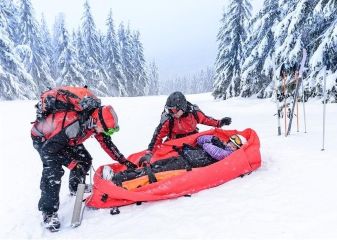
Two ski patrollers with a rescue sled helping an injured woman on a snowy trail.
When working outside, recreational protective service workers may be exposed to all types of weather conditions.

Recreational protective service workers held about 162,000 jobs in 2025. Some of the largest employers of recreational protective service workers were as follows:

Local government, excluding education and hospitals 34%
Fitness and recreational sports centers 22
Civic and social organizations 12
Amusement parks and arcades 8
Educational services; state, local, and private 6

Many recreational protective service workers spend much of their time outdoors and are exposed to varied weather conditions, such as extreme hot or cold temperatures or wet environments.

Appropriate protective clothing and gear may be necessary to prevent exposure to the elements or other hazards. Outdoor lifeguards, for example, must wear sun protection, while ski patrollers often wear gloves, wind and waterproof pants, jackets, ski boots, goggles, and helmets.

These workers may spend multiple hours standing, walking, or moving around on equipment such as bikes or skis.

The work can be stressful at times, especially when guests are injured or need help. Ski patrollers and bike patrollers who work in mountainous areas must be comfortable working in high altitude environments.

Work Schedules

Part-time work is common. Work schedules may vary and include early mornings, evenings, weekends, and holidays. Jobs for recreational protective service workers are often seasonal. For example, some lifeguards primarily work during summer months, while ski patrollers primarily work during winter months.

How to Become a Recreational Protective Service Worker About this section

A bike patroller applying a bandage to an injured biker.
Recreational protective service workers often must be certified in first aid.

Recreational protective service workers typically do not need formal education to enter the occupation. To qualify for jobs, candidates usually need athletic ability in a related recreational sport, such as swimming, skiing, or biking. Certification is often required.

Education

Recreational protective service workers typically do not need a formal education credential to qualify for entry-level jobs. For some positions, employers may prefer a high school diploma or the equivalent.

Taking lessons in a particular sport, such as swimming or skiing, is one way for prospective workers to prepare for these jobs. Participating in after-school activities, such as swimming, skiing, or mountain biking clubs or teams, also may be helpful.

Other Experience

These workers usually need athletic ability in a related recreational sport, which they often gain through years of practice and experience. For example, lifeguards must be strong swimmers, and ski and bike patrollers must be able to ride confidently across various terrains.

Employers may require recreational protective service workers to try out or pass tests to demonstrate their abilities. Prospective lifeguards, for example, might need to swim several hundred yards in a specified amount of time, while ski patrollers might need to ski down technical terrain in varied conditions.

Licenses, Certifications, and Registrations

Recreational protective service workers often need to be certified. Common certifications include cardiopulmonary resuscitation (CPR) and first aid.

Other required credentials vary by position. For example, lifeguards typically need lifeguard certification, while ski or bike patrollers may need certifications related to emergency medical care or wilderness response. Some employers provide training to help workers earn the required certifications. Information on certifications and state licensing board requirements is available from CareerOneStop.

Additional requirements for these workers may include meeting a minimum age or passing a background check.

Training

Recreational protective service workers typically receive short-term on-the-job training after they are hired. Some workers may complete additional training. For example, ski patrollers may be trained on rescue techniques or how to operate ski lifts and other equipment.

Important Qualities

The following are examples of qualities that are important for these workers to perform their duties. For more information, visit the Employment Projections (EP) skills data page.

Adaptability. Recreational protective service workers must be able to handle changing conditions and situations, such as weather events and accidents.

Detail oriented. Recreational protective service workers must be attentive to their surroundings while monitoring guests and visitors for safety. They must also provide accurate information on injury and accident reports.

Interpersonal skills. Recreational protective service workers must interact well with guests, injured participants, and coworkers.

Physical stamina. Recreational protective service workers must be comfortable performing physically demanding tasks, such as swimming for a long duration or skiing in challenging conditions.

Physical strength. Recreational protective service workers must be strong enough to lift and carry heavy equipment and injured guests.

Problem-solving skills. Recreational protective service workers must identify symptoms and determine the appropriate treatment or response when recreational participants are sick or injured. They also may need to help with equipment-related issues or repairs.

Pay About this section

Recreational Protective Service Workers

Median annual wages, May 2025

Total, all occupations

$50,980

Other protective service workers

$37,890

Recreational protective service workers

$33,580


The median annual wage for recreational protective service workers was $33,580 in May 2025. The median wage is the wage at which half the workers in an occupation earned more than that amount and half earned less. The lowest 10 percent earned less than $25,780, and the highest 10 percent earned more than $43,970.

In May 2025, the median annual wages for recreational protective service workers in some of the top industries in which they worked were as follows:

Amusement parks and arcades $35,040
Local government, excluding education and hospitals 34,470
Educational services; state, local, and private 33,440
Fitness and recreational sports centers 31,200
Civic and social organizations 31,000

Part-time work is common. Work schedules may vary and include early mornings, evenings, weekends, and holidays. Jobs for recreational protective service workers are often seasonal. For example, some lifeguards primarily work during summer months, while ski patrollers primarily work during winter months.

Job Outlook About this section

Recreational Protective Service Workers

Percent change in employment, projected 2025–35

Recreational protective service workers

5%

Total, all occupations

3%

Other protective service workers

1%


Employment of recreational protective service workers is projected to grow 5 percent from 2025 to 2035, faster than the average for all occupations.

About 45,400 openings for recreational protective service workers are projected each year, on average, over the decade. Many of those openings are expected to result from the need to replace workers who transfer to different occupations or exit the labor force, such as to retire.

Employment

Employment is expected to stem from public interest in recreational activities, such as swimming and skiing. These workers will continue to be needed to monitor various recreation sites to keep the public safe and respond to emergencies when they occur. A growing focus on lifelong well-being is expected to boost demand for athletic recreation activities, as well as for the workers responsible for maintaining participants' (or public) safety.

Employment projections data for recreational protective service workers, 2025–35
Occupational Title SOC Code Employment, 2025 Projected Employment, 2035 Change, 2025–35 Employment by Industry
Percent Numeric

Note:
Employment subcategories do not necessarily add to higher categories due to rounding.
Employment and projected employment change values are rounded to the nearest 100 or percent.
Data is unavailable for values denoted with a "—".
Source: U.S. Bureau of Labor Statistics.

Lifeguards, ski patrol, and other recreational protective service workers

33-9092 162,000 170,800 5 8,900 Get data

State & Area Data About this section

Occupational Employment and Wage Statistics (OEWS)

The Occupational Employment and Wage Statistics (OEWS) program produces employment and wage estimates annually for over 800 occupations. These estimates are available for the nation as a whole, for individual states, and for metropolitan and nonmetropolitan areas. The link below goes to OEWS data maps for employment and wages by state and area. Use the dropdown boxes to select an occupation.

Projections Central

Occupational employment projections are developed for all states by Labor Market Information (LMI) or individual state Employment Projections offices. All state projections data are available at https://projectionscentral.org. Information on this site allows projected employment growth for an occupation to be compared among states or to be compared within one state. In addition, states may produce projections for areas; there are links to each state’s websites where these data may be retrieved.

CareerOneStop

CareerOneStop includes hundreds of occupational profiles with data available by state and metro area. There are links in the left-hand side menu to compare occupational employment by state and occupational wages by local area or metro area. There is also a salary info tool to search for wages by zip code.

Similar Occupations About this section

This table shows a list of occupations with job duties that are similar to those of recreational protective service workers.

Occupation Job Duties ENTRY-LEVEL EDUCATION Help on Entry-Level Education 2025 MEDIAN PAY Help on Median Pay
Firefighters Firefighters

Firefighters control and put out fires and respond to emergencies involving life, property, or the environment.

Postsecondary nondegree award $59,280
Security guards and gaming surveillance officers Security Guards and Gambling Surveillance Officers

Security guards and gambling surveillance officers protect property from illegal activity.

High school diploma or equivalent $38,050
Recreation workers Recreation Workers

Recreation workers organize, conduct, and promote a variety of group activities for leisure and other purposes.

High school diploma or equivalent $36,560
EMTs and paramedics EMTs and Paramedics

Emergency medical technicians (EMTs) and paramedics assess injuries and illnesses, provide emergency medical care, and may transport patients to medical facilities.

Postsecondary nondegree award $48,150
Occupational health and safety specialists Occupational Health and Safety Specialists and Technicians

Occupational health and safety specialists and technicians collect data on, analyze, and design improvements to work environments and procedures.

See How to Become One $83,740
Suggested citation:

Bureau of Labor Statistics, U.S. Department of Labor, Occupational Outlook Handbook, Recreational Protective Service Workers,
at https://www.bls.gov/ooh/protective-service/recreational-protective-service-workers.htm (visited August 27, 2026).

Last modified date: August 27, 2026

What They Do

The What They Do tab describes the typical duties and responsibilities of workers in the occupation, including what tools and equipment they use and how closely they are supervised. This tab also covers different types of occupational specialties.

Work Environment

The Work Environment tab includes the number of jobs held in the occupation and describes the workplace, the level of physical activity expected, and typical hours worked. It may also discuss the major industries that employed the occupation. This tab may also describe opportunities for part-time work, the amount and type of travel required, any safety equipment that is used, and the risk of injury that workers may face.

How to Become One

The How to Become One tab describes how to prepare for a job in the occupation. This tab can include information on education, training, work experience, licensing and certification, and important qualities that are required or helpful for entering or working in the occupation.

Pay

The Pay tab describes typical earnings and how workers in the occupation are compensated—annual salaries, hourly wages, commissions, tips, or bonuses. Within every occupation, earnings vary by experience, responsibility, performance, tenure, and geographic area. For most profiles, this tab has a table with wages in the major industries employing the occupation. It does not include pay for self-employed workers, agriculture workers, or workers in private households because these data are not collected by the Occupational Employment and Wage Statistics (OEWS) survey, the source of BLS wage data in the OOH.

State & Area Data

The State and Area Data tab provides links to state and area occupational data from the Occupational Employment and Wage Statistics (OEWS) program, state projections data from Projections Central, and occupational information from the Department of Labor's CareerOneStop.

Job Outlook

The Job Outlook tab describes the factors that affect employment growth or decline in the occupation, and in some instances, describes the relationship between the number of job seekers and the number of job openings.

Similar Occupations

The Similar Occupations tab describes occupations that share similar duties, skills, interests, education, or training with the occupation covered in the profile.

Contacts for More Information

The More Information tab provides the Internet addresses of associations, government agencies, unions, and other organizations that can provide additional information on the occupation. This tab also includes links to relevant occupational information from the Occupational Information Network (O*NET).

2025 Median Pay

The wage at which half of the workers in the occupation earned more than that amount and half earned less. Median wage data are from the BLS Occupational Employment and Wage Statistics survey. In May 2025, the median annual wage for all workers was $50,980.

On-the-job Training

Additional training needed (postemployment) to attain competency in the skills needed in this occupation.

Entry-level Education

Typical level of education that most workers need to enter this occupation.

Work experience in a related occupation

Work experience that is commonly considered necessary by employers, or is a commonly accepted substitute for more formal types of training or education.

Number of Jobs, 2025

The employment, or size, of this occupation in 2025, which is the base year of the 2025–35 employment projections.

Job Outlook, 2025-35

The projected percent change in employment from 2025 to 2035. The average growth rate for all occupations is 3 percent.

Employment Change, 2025-35

The projected numeric change in employment from 2025 to 2035.

Entry-level Education

Typical level of education that most workers need to enter this occupation.

On-the-job Training

Additional training needed (postemployment) to attain competency in the skills needed in this occupation.

Employment Change, projected 2025-35

The projected numeric change in employment from 2025 to 2035.

Growth Rate (Projected)

The percent change of employment for each occupation from 2025 to 2035.

Projected Number of New Jobs

The projected numeric change in employment from 2025 to 2035.

Projected Growth Rate

The projected percent change in employment from 2025 to 2035.

2025 Median Pay

The wage at which half of the workers in the occupation earned more than that amount and half earned less. Median wage data are from the BLS Occupational Employment and Wage Statistics survey. In May 2025, the median annual wage for all workers was $50,980.